How the Right Physiotherapy Tables Improve Treatment Outcomes

The physiotherapy table a patient lies down on does more work than most clinic owners give it credit for. It holds the body still during deep tissue work. It moves with the therapist during mobilization. It carries the weight of a 110 kg patient for one hour and a 45 kg child the next. When the table fails, the treatment fails with it.
This is the part that gets overlooked during procurement. Buyers compare prices and section counts. They ask about the warranty. They rarely ask whether the physiotherapy table will help the therapist deliver a better result or get in the way. Here is why that question matters.
Adjustability decides what a therapist can actually do.
A fixed-height table forces the therapist to bend. Bend long enough, day after day, and the back goes. That is one part of the problem. The other part is the patient. A chest assessment needs a different inclination than a lumbar mobilization. Manual therapy on a frozen shoulder calls for the patient to be lower, sometimes much lower, than what a standard 76 cm table allows.
When the table cannot drop or rise quickly, therapists improvise. They stack pillows. They adjust their own posture. They cut the technique short. None of these workarounds produces the result the patient came in for. Worse, the patient walks out with a session that felt rushed and does not know why.
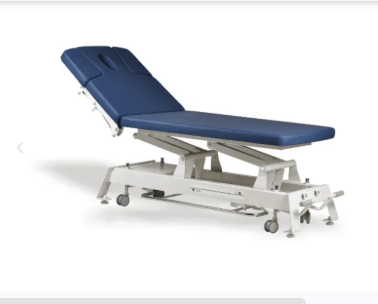
A Hi-Lo electric table fixes most of this. Take the Esthetica Mahit 7-Section. Seven independently adjustable sections mean the therapist sets up the body in the position the technique requires, not the other way around. The walk-free switch lets the therapist make changes mid-session without stepping away from the patient.
See also: Choosing a Teflon Hose for High-Temperature Applications
Build quality is not just a marketing line.
It changes outcomes. A wobble during a high-velocity thrust technique is a problem. A creaky frame during a sensitive pediatric session is a different kind of problem, but still a problem. Tables built on thin tubing or low-grade welds develop play within a year. The patient feels it. The therapist feels it. Confidence drops on both sides. After that, the patient either stops booking or stops paying for the upgraded session.
Esthetica builds its physiotherapy tables on precision-welded steel frames at the IMT Manesar facility. CNC turning and laser cutting handle the metalwork in-house. This is worth checking with any supplier you are evaluating. Ask whether they manufacture or source the frame. The answer tells you a lot about how the table will hold up after three years of daily use.
Patient comfort is part of the clinical equation.
Comfort sounds like a soft requirement. It is not. A patient who is uncomfortable on the table tenses up. Tense muscles do not respond to mobilization the way relaxed ones do. The therapist works harder. Results take longer to show.
Cushioning that is too firm causes pressure points during longer sessions. Cushioning that is too soft destabilizes the spine during manipulation. The right density sits somewhere in between, and the upholstery has to keep its shape after thousands of sessions.
The Parth Physiotherapy Table and the Manan Eco use upholstery that resists abrasion and disinfectant exposure. That matters because a clinic that wipes down tables ten times a day will see vinyl crack within months on cheaper options. Once the upholstery splits, the table is finished, regardless of how good the frame underneath is.
What to ask a manufacturer before signing the order
Three questions tend to surface the difference between a real manufacturer and a reseller dressed up as one. Ask where the frame is fabricated. Ask what the motor warranty covers, separately from the structural warranty. Ask whether spare upholstery and replacement actuators are stocked locally, or shipped from somewhere else with a six-week lead time. Local stocking sounds boring in a brochure. It becomes the difference between a one-day fix and a clinic running on a borrowed table for a month.
Esthetica answers all three from its own production floor. The motors, the upholstery, the welds, the powder coating, all of it is handled at one facility in Gurgaon. When something needs servicing, the parts and the people are in the same country as the clinic.
A clinic owner setting up a new physiotherapy practice, or replacing tired equipment in an existing one, is not just buying furniture. The decision shapes treatment quality, therapist retention, patient reviews, and the cost of running the practice five years from now. A poor table choice is rarely visible on day one. It shows up in the patients who do not come back, and the therapists who quietly stop pushing technique because their backs hurt.
The right physiotherapy table is the one that disappears from the conversation. Patients stop noticing it. Therapists stop fighting it, and outcomes start improving on their own.