Custom Hiking Socks for Outdoor Clubs: Material, Cushioning, and Fit

Outdoor clubs and hiking groups need socks that can handle more than casual wear. A hiking sock should reduce friction, provide enough cushioning, manage moisture, and stay comfortable during long walks. If the sock slips, bunches, or traps too much moisture, even a good design will not save the product.
For custom orders, hiking socks should be planned around real use first and branding second.
Start With the Hiking Environment
Short city walks and long mountain hikes do not need the same sock. A light outdoor sock may work for mild trails and warm weather. A thicker wool-blend sock may be better for cold weather, boots, or longer routes.
For hiking socks, crew height is often practical because it protects the ankle and lower leg from boot friction. Knee-high socks may be useful in specific outdoor conditions, but they may be too much for general group orders.
For outdoor groups ordering custom socks for teams, the sock should be tested with the footwear people actually use.
Cushioning Helps, but Too Much Can Cause Fit Problems
Cushioning can improve comfort under the foot, especially in the heel and toe areas. However, too much cushioning can make boots or shoes feel tight.
A light cushion may work for day hikes. A heavier cushion may be better for colder weather or rougher routes. Buyers should avoid making the entire sock thick unless the use case truly requires it.
Moisture Control Matters
Hiking socks need to manage sweat. A sock that stays damp can increase discomfort and friction. Wool blends, especially merino blends, are commonly used because they can balance warmth and moisture management. Synthetic support fibers can improve durability and shape retention.
Alpaca may offer strong warmth and softness, but buyers should compare how it performs against merino for hiking use. A guide to alpaca vs merino wool socks can help explain which fiber may be better for hiking, winter wear, and long outdoor use.
Logo Design Should Not Affect Comfort
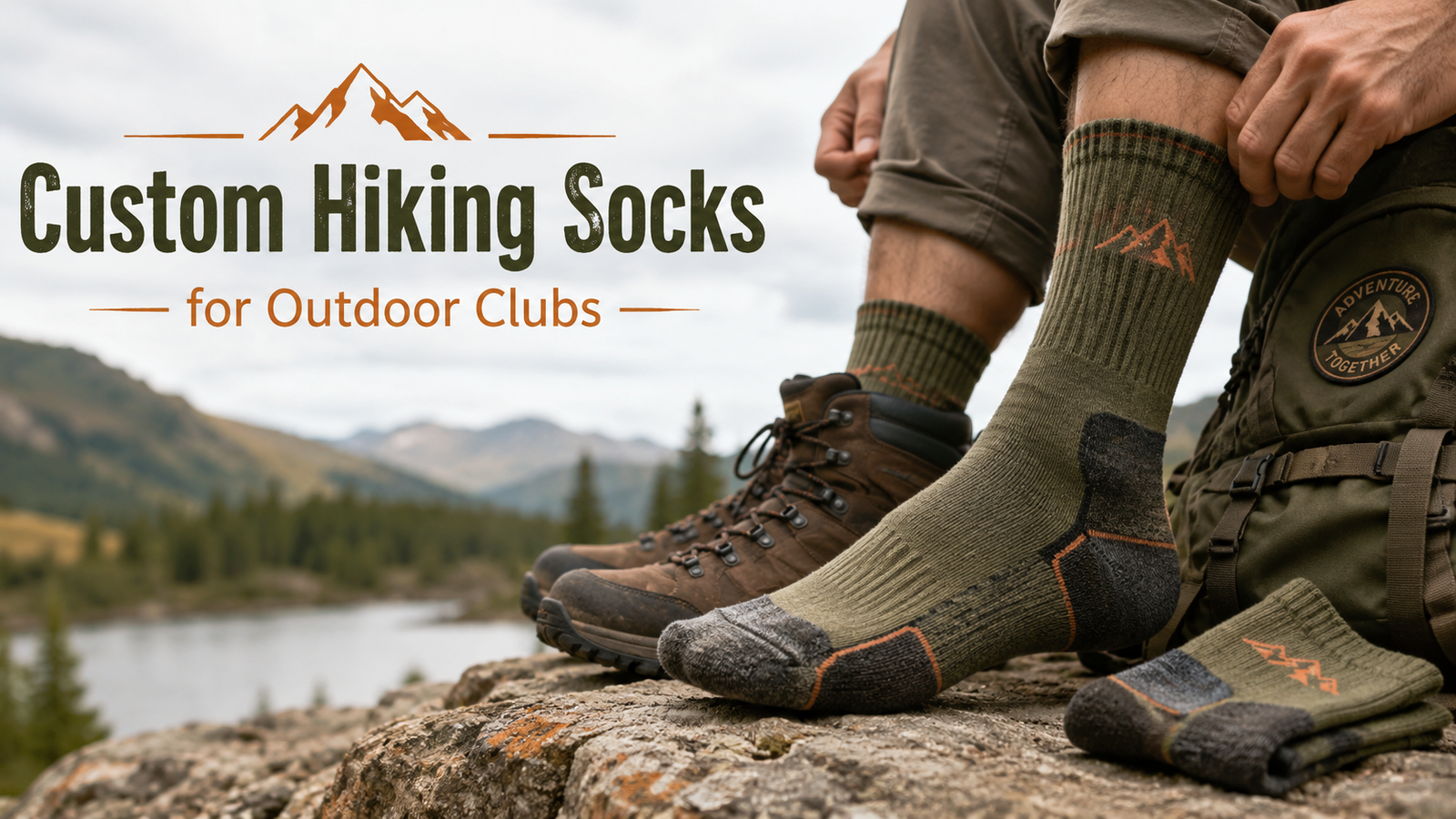
Outdoor socks can include logos, stripes, or patterns, but the design should not create discomfort. A logo placed too low on the foot may sit inside the shoe and face more friction. A calf or cuff logo is usually safer for visibility.
For hiking socks, bold shapes are better than tiny text. Stretch and texture can reduce logo clarity when the sock is worn.
Practical Checklist for Outdoor Orders
Before ordering hiking socks, check:
- Will the socks be worn with boots or sneakers?
- Is the climate warm, cold, or mixed?
- Does the sock need light or heavy cushioning?
- Will the material handle moisture well?
- Is the logo placed away from high-friction areas?
See also: Why a regular massage is becoming less of a treat and more of a survival tool for busy adults
Conclusion
Custom hiking socks should be built for comfort first. Material, cushioning, height, and fit affect the user experience more than decoration alone.
For outdoor clubs, a practical wool-blend or performance blend can create socks that people actually wear on trails, not just keep as merchandise.