Planning a Factory Move From Equipment Removal to Reinstallation

Moving a factory is not like moving an office. You can’t just pack up a few desks over a weekend and reopen on Monday. There are machines bolted to the floor, production lines that took years to tune, and a schedule where every day of downtime has a real dollar cost attached to it. This is exactly why most operators bring in a factory relocation company instead of trying to run the move with their own maintenance team and a rented truck.
The plants that move without disaster all have one thing in common. They treat the relocation as its own project, with its own plan, instead of squeezing it in around normal operations and hoping for the best.
Why Factory Moves Go Wrong More Often Than People Expect
A lot of relocation problems don’t come from the move itself. They come from underestimating what it actually takes to disconnect, transport, and reinstall production equipment without damaging it or losing weeks of calibration work.
Machines that have been running in one spot for ten years develop their own quirks. Alignments shift, wiring gets modified on site, and someone on the floor knows exactly how to keep that one old press running even though nothing about it is written down. When that machine gets moved by a crew that doesn’t understand what they’re looking at, all of that institutional knowledge can get lost in the process.
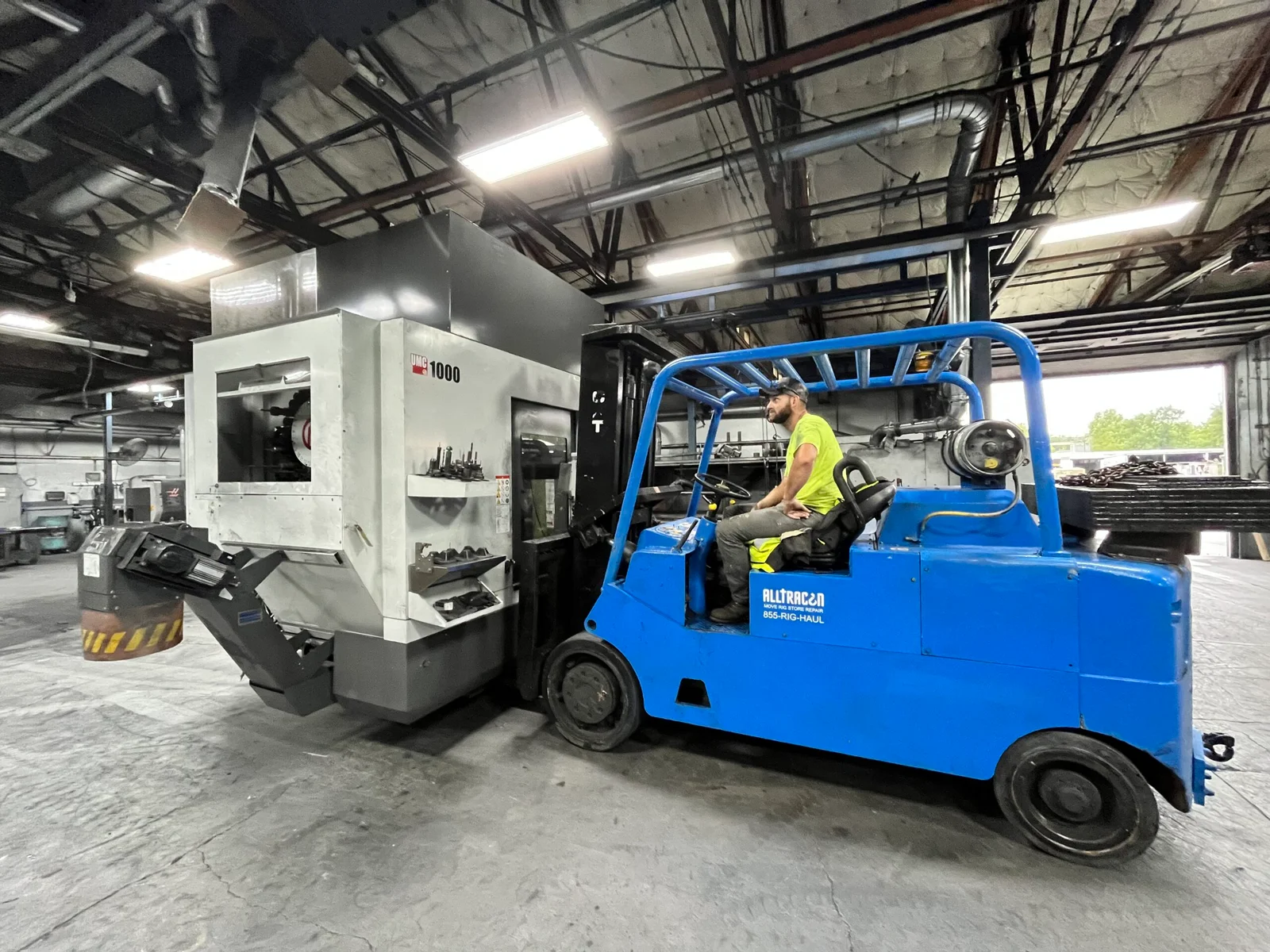
Then there’s the physical side. Heavy equipment needs proper rigging, the right lifting points, and a transport plan that accounts for weight limits and clearance, not just a flatbed and some straps. Get this wrong and you’re not looking at a delay, you’re looking at a damaged machine and a much bigger repair bill than the move itself.
What Actually Happens During Equipment Removal
Removal sounds like the simple part. It isn’t. Before anything gets unbolted, someone needs to document how it’s currently installed, including electrical connections, utility hookups, and any custom fittings that won’t be obvious once the machine is gone.
Skipping this step is how reinstallation turns into guesswork. A good machinery moving company photographs and labels everything before disconnection, so the reinstall isn’t a puzzle nobody can solve six weeks later.
Disconnection itself needs to follow the right sequence too. Power gets isolated properly, hydraulic and pneumatic lines get drained and capped, and any calibration settings get recorded before the machine loses its reference points. None of this is difficult work, but it’s the kind of work that goes wrong fast when it’s rushed or handed to a crew unfamiliar with the specific equipment.
Transport Is Where Most of the Risk Lives
Once equipment is disconnected, the transport phase is where things can genuinely go wrong. This isn’t about finding a truck big enough. It’s about weight distribution, tie-down points that won’t stress the frame, and a route that accounts for bridge clearances, weight restrictions, and road conditions.
Precision equipment is particularly unforgiving here. A CNC machine that gets jolted on a rough stretch of highway can come out of alignment in ways that aren’t obvious until you’re running parts through it weeks later and the tolerances are off. Vibration matters as much as impact does, which is why proper cushioning and securing isn’t optional, even for short-distance moves.
This is also where industrial plant relocation services earn the fee people sometimes question upfront. A crew that’s moved this kind of equipment before knows which machines need air-ride suspension trailers and which ones can travel on standard flatbeds, and that judgment call is the difference between a clean move and an expensive mistake.
Reinstallation Is Not Just Undoing the Removal
People sometimes assume reinstallation is removal in reverse. It’s close, but not quite. This is where things also get connected to a different building, different utility runs, possibly a different floor slab, and a layout that may not match the old one exactly.
A proper mechanical installation company will re-level and re-align equipment to the same tolerances it had before the move, not just bolt it down and call it done. Skipping proper alignment is how you end up with premature wear, inconsistent output, or safety issues that show up months later instead of on day one.
Utilities need to be reconnected and tested before equipment goes back into full production, not after. That includes electrical, compressed air, cooling lines, and any control system integration the machine relies on. Rushing this step to hit a reopening date is how a two-day fix turns into two weeks of troubleshooting once the line is already supposed to be running.
Layout also deserves a second look during reinstallation, not just a copy-paste of the old floor plan. A move is a rare chance to fix workflow problems that existed at the old facility, whether that’s better material flow, more logical staging areas, or simply more room around a machine that always felt cramped. This is also where working with a facility management company that understands both the mechanical and the building side pays off, since layout decisions affect electrical runs, structural loads, and future maintenance access all at once.
Minimizing Downtime Without Cutting Corners
Every plant relocation has a downtime number attached to it, whether it’s stated out loud or not. The instinct is usually to compress the schedule as much as possible, but cutting corners on disconnection or alignment to save a few days almost always costs more time later when something needs to be redone.
The smarter approach is sequencing the move so production-critical equipment goes last on the removal side and first on the reinstall side, keeping the actual production gap as short as possible without rushing the technical steps. Some operators also stagger the move in phases, relocating non-critical lines first to test the process before moving the equipment they can least afford to have go wrong.
None of this planning happens well over email threads and phone calls with three different vendors. If you’re staring down a relocation and want to figure out what a realistic timeline actually looks like for your equipment, it makes sense to connect with us and talk through the specifics before a date gets locked in.
Questions Worth Asking Before You Commit to a Moving Date
Before any equipment gets touched, it’s worth getting clear answers on a few things. Does the new facility’s power supply match what your equipment actually needs, or is an upgrade required first? Is the floor slab rated for the same loads as your current location? Are there any machines in the plant that are old enough or specialized enough that parts or expertise for reinstallation might be hard to source if something goes wrong?
These aren’t exciting questions, but they’re the ones that determine whether your move timeline is realistic or optimistic. A vendor who can answer them clearly before the move starts is usually a good sign. One who waves them off with a generic timeline is a warning sign worth paying attention to.
What Separates a Smooth Move From a Costly One
The plants that relocate without major setbacks usually aren’t the ones with the most expensive equipment or the biggest budget. They’re the ones where one team handled documentation, removal, transport, and reinstallation as a single connected process instead of four separate jobs handed to four separate contractors who never talk to each other.
That continuity is what keeps calibration data, wiring knowledge, and utility requirements from getting lost somewhere between the old building and the new one. It’s a less flashy way to plan a move, but it’s the difference between reopening on schedule and explaining to your customers why the line still isn’t running three weeks later.